Areas of Interest
The School for Rhetors focuses on learning Rhetoric, mentoring students, and teaching English studies with special attention to five areas:
Rhetorical Theory
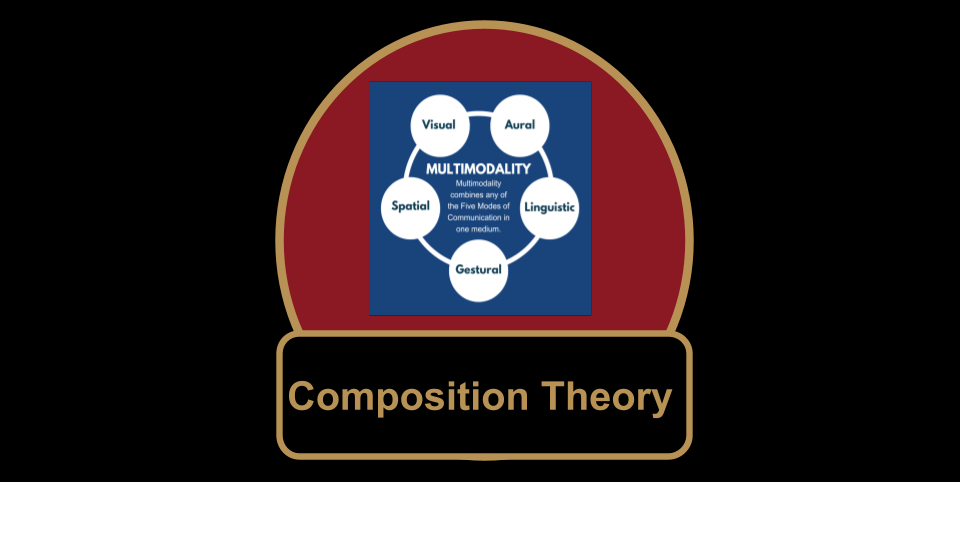
Composition Theory
Literary Theory
Popular Culture
Education
Our ultimate goal is helping people become Lifelong Learners who will be able to exercise critical thinking and learn on their own terms on an independent basis.
Rhetoric and its study of persuasion is arguably one of the most accessible entry points into English studies. Rhetors believe that everything is an argument and its starting point involves what Lloyd Bitzer called The Rhetorical Situation, understood today as five parts: Audience, Purpose, Message, Context, and Exigence. Rhetors also use Aristotle’s model of argument understood as: Ethos, Logos, Pathos. Some theorists include:
Plato
Aristotle
Cicero
Quintillian
Walter J. Ong
I.A. Richards
Kenneth Burke
Gunther Kress
Theo van Leeuwen
Richard Grusin
Lev Manovich
Isocrates
James Paul Gee
Ian Bogost
Wayne C. Booth
Writing is one of the oldest forms of communication that once subscribed to approaching itself as a product-first activity learned in pre-college classrooms using offline means. However, today we live in a culture where writing happens within an increasingly online culture, which is why we focus on Multimodal Composition, expressed as communication using two of more of the following means: Audio, Visual, Textual, Spatial, and Gestural.
We still respect offline writing theories predating Multimodal Composition, which is why theorists include:
Cynthia L. Selfe
Jay David Bolter
Peter Elbow
Richard Vatz
James Berlin
Linda Flowers
John R. Hayes
Lester Faigley
Andrea Lunsford
Scott McCloud
Literature, like Rhetoric, is an accessible entry point in English studies. Literary theorists believe that everything is a text and may be interpreted using a range of frameworks combined with time periods. Some theories include: New Criticism, Feminism, Deconstructionism, Marxism, Psychoanalysis, Reader-Response, New Historicism, Structuralism and Post-Structuralism, Colonialism and Post-Colonialism. Some theorists include:
Jacques Lacan
Terry Eagleton
Karl Marx
Jean Beaudrillard
Simone de Beauvoir
Christine de Pizan
Helene Cixous
Cleanth Brooks
James Phelan
Stanley Fish
Wolfgang Iser
Hans Robert Jauss
Roland Barthes
Claude Levi-Strauss
Ferdinand de Saussure
Joseph Campbell
Jacques Derrida
Harold Bloom
Stephen Greenblatt
Michel Foucault
Homi K. Bhabha
Edward Said
Erich Auerbach

Popular Culture as an academic field of study always faces an uphill epic quest for legitimacy, but it is often the most accessible point of entry into English studies. Due to its interdisciplinary nature and always ready audience of students, we encourage applying theory to media we consume on a regular basis, which includes areas such as: TV, movies, comic books, music, anime, manga, gaming, and others. A few examples include:
DC Comics (Superman, Green Lantern, Wonder Woman)
Marvel Comics (Spider-Man, Hulk, X-Men)
TV (Knight Rider, Star Trek, Star Wars, Highlander, Better Call Saul, Chuck)
Movies (Top Gun, Star Wars, The Matrix, James Bond, Rocky, Karate Kid, Indiana Jones, Lord of the Rings, Idiocracy, Pump Up the Volume, Mannequin, Ferris Bueller’s Day Off, The Wizard)
Music (1960s-1990s Rock and Pop)
Gaming (Call of Duty, Castlevania, Final Fantasy, Fallout, God of War)
Education (especially higher education) combined with Rhetorical Theory represents the origin story for our School for Rhetors. Education must pursue more non-traditional praxis or else students will move on without guidance from it. Isocrates believed that education must be reserved for students who possess “natural talent” as a prerequisite.
Our School for Rhetors rejects Isocrates’s belief along with unnecessary institutional gatekeeping that hoards knowledge for scholars. We believe in open-source public scholarship and oppose paywalls preventing people who are non-scholars interested in accessing knowledge that should be free. Some theorists include:
Paulo Friere
John Dewey
Henry Giroux
bell hooks
Ivan Illich